 ALKNETWORK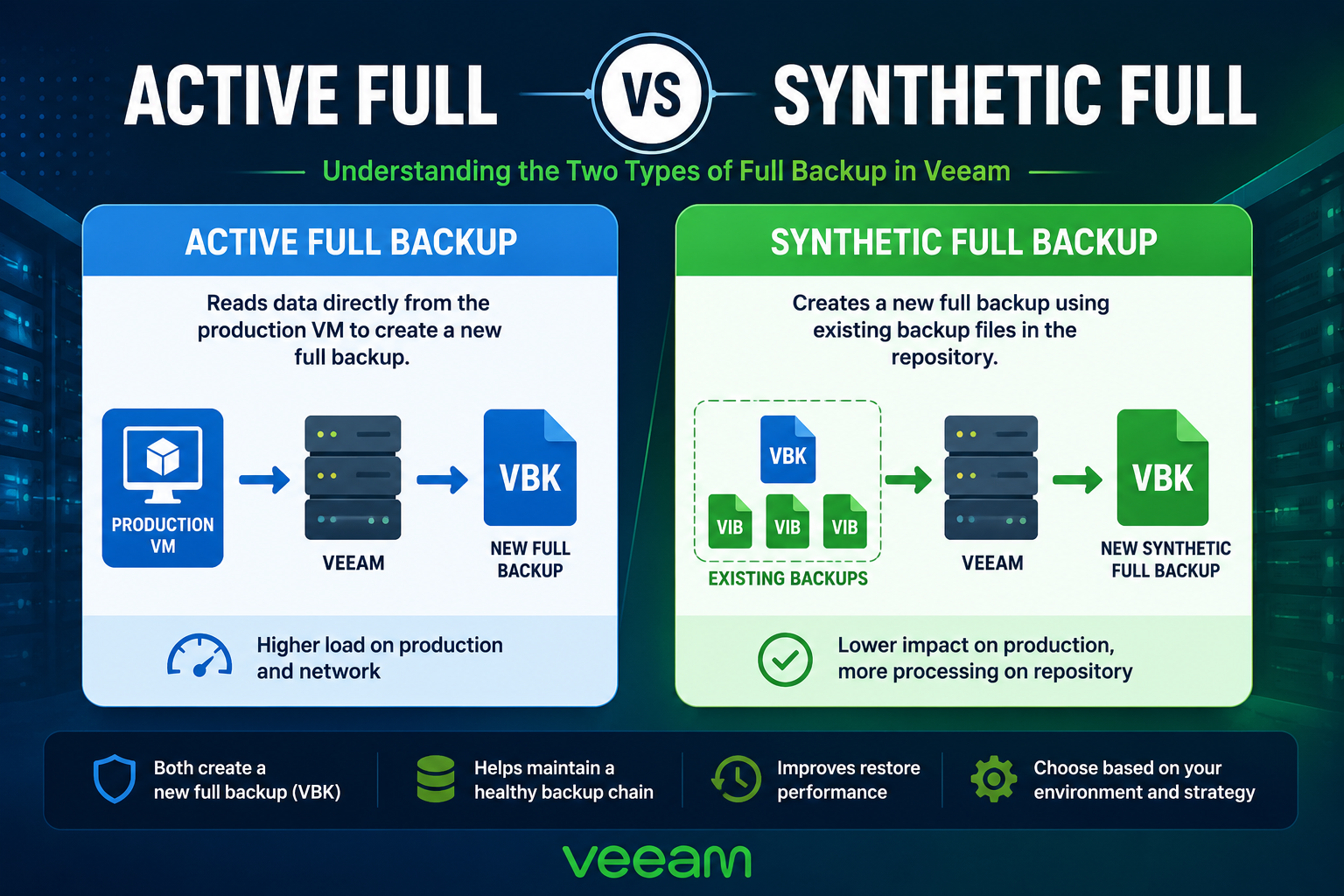
Introduction
In Veeam, a full backup can be created using different methods, with Active Full and Synthetic Full being two common approaches. Although both methods produce a new full backup, the way Veeam obtains and processes the backup data is different, which can have an impact on the production environment, network, repository, and overall backup performance.
Active Full Backup
An Active Full backup creates a new full backup by reading the required data directly from the production VM.
In simple terms, Veeam goes back to the production environment and reads the VM data again to create a new full backup file.
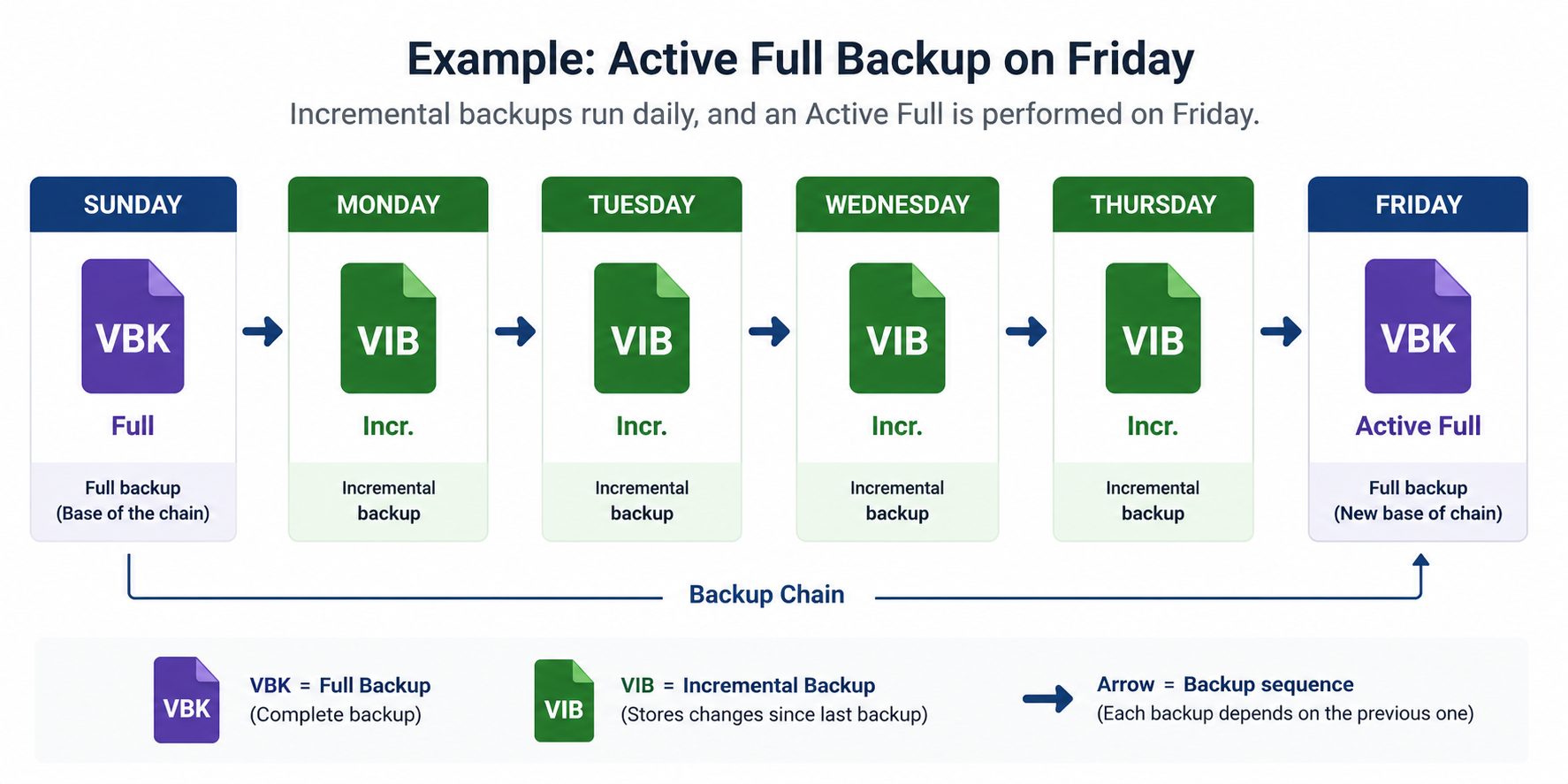
The Friday backup is a completely new full backup created from the production VM.
Because Veeam needs to read data from the production environment, an Active Full can generate additional storage I/O, network traffic, and load on the production infrastructure, especially when protecting large VMs or a large number of VMs at the same time.
Synthetic Full Backup
A Synthetic Full creates a new full backup using the existing backup files stored in the backup repository.
Instead of reading the entire VM again from production, Veeam processes the existing backup chain to create a new full backup.
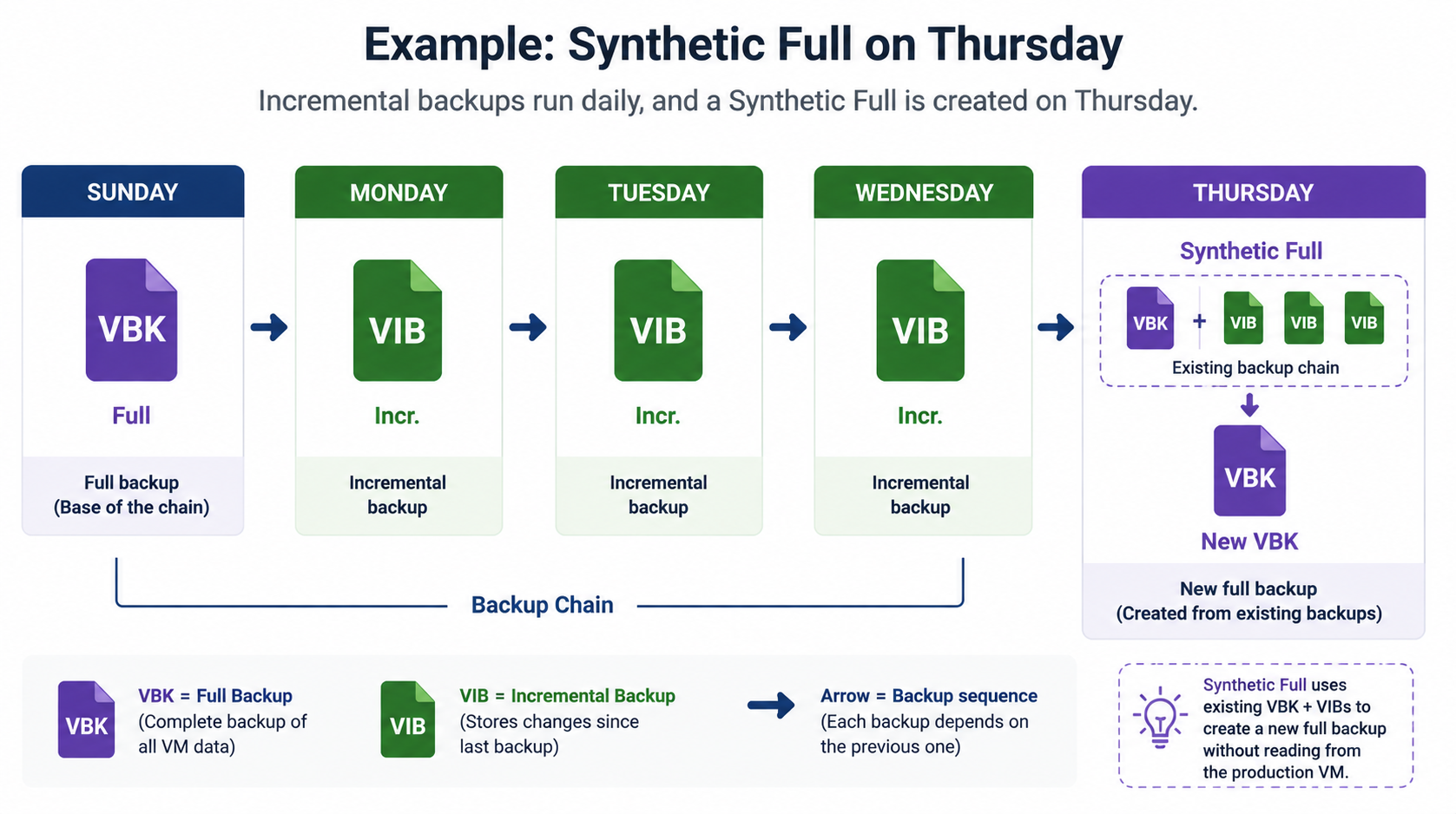
The main advantage is that Veeam does not need to read the entire VM again from the production environment to create the new full backup.
However, the processing is performed using resources from the backup infrastructure and repository, so the repository needs to have sufficient performance and available space.
Active Full vs Synthetic Full
| Feature | Active Full | Synthetic Full |
|---|---|---|
| Data source | Production VM | Existing backup files |
| New VBK created | Yes | Yes |
| Production read | Higher | Lower |
| Network impact | Can be higher | Generally lower |
| Repository processing | Lower | Higher |
| Existing backup required | No | Yes |
Key Points
- Active Full reads data directly from the production VM.
- Synthetic Full uses existing backup files in the repository.
- Both methods create a new full backup (VBK).
- Active Full can place additional load on the production environment.
- Synthetic Full shifts more processing to the backup repository.
- Repository performance is important when using Synthetic Full.
Conclusion
Both Active Full and Synthetic Full provide a new full backup, but they achieve this in different ways. Active Full reads the data again from production, while Synthetic Full builds the new full backup from existing backup data in the repository, so the better choice depends on the available resources, repository performance, production workload, and overall backup strategy.